
Diplomat's Connect
Should your embassy / consulate require any assistance with your Visa Outsourcing Business or you wish to visit our Visa Application Centre (VAC), please provide the below details.
How AI and Biometrics Are Shaping the Future of Citizen Services
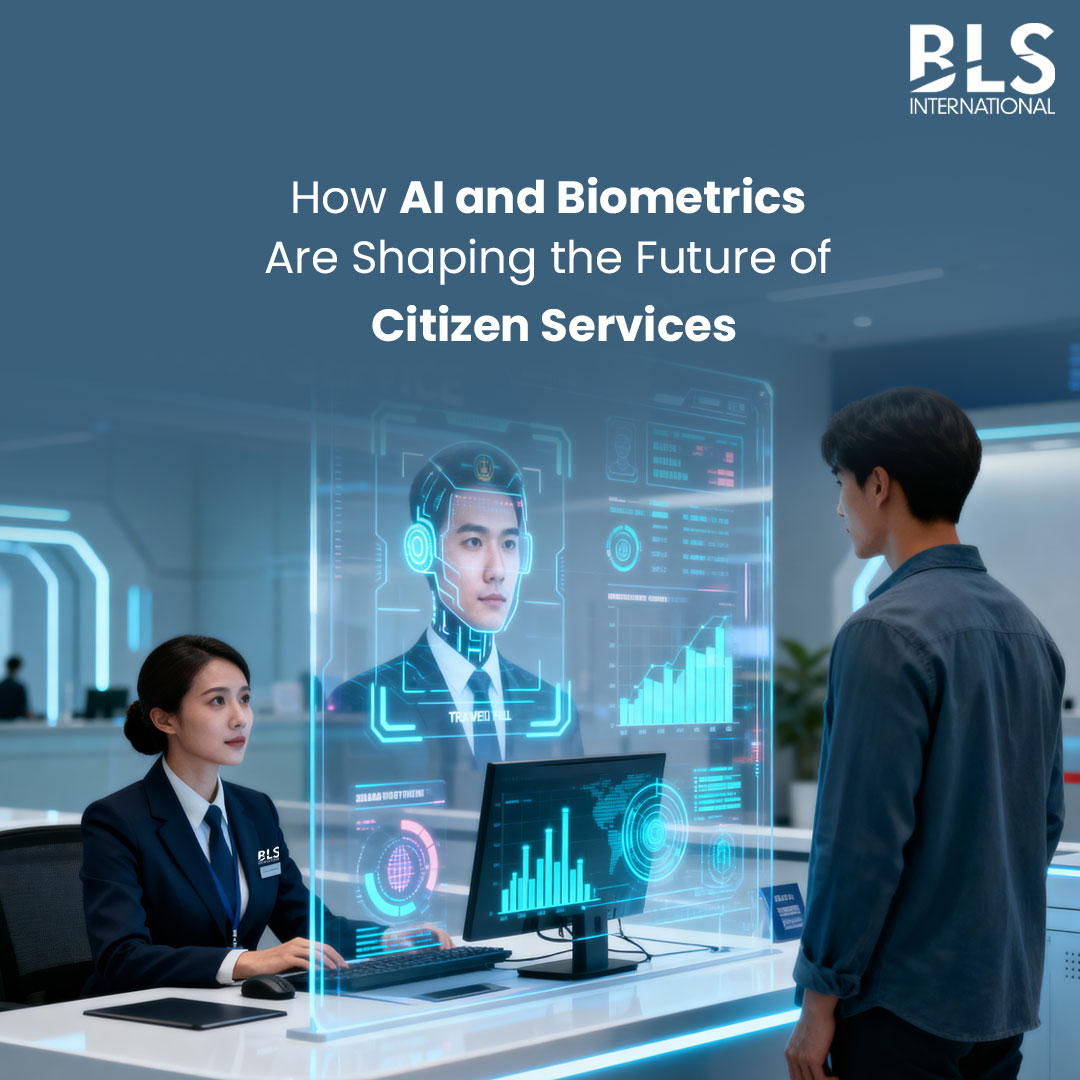
In today’s digitally connected world, governments face a delicate
balancing act: protecting citizens while making public services fast,
accessible, and user-friendly. Regulatory compliance is non-negotiable, but
that doesn’t mean customer satisfaction should take a backseat. The real
game-changer? Smart technology — specifically AI and biometric verification —
ensures that safety and convenience move forward together. These tools allow
governments to uphold strict security and regulatory standards while delivering
a seamless citizen experience.
BLS International, a trusted partner to governments worldwide,
demonstrates how innovation and security can work cohesively. By integrating AI
and biometric systems into everyday operations, public services are becoming
faster, safer, and more inclusive — setting a new standard for citizen-centric
governance.
1. Enhancing Identity Verification with Facial Biometrics
Traditional ID checks, while still important, are increasingly
supplemented by biometric authentication, which identifies individuals quickly
and accurately. Facial biometrics are transforming identity verification. This
drastically reduces risks of impersonation or fraud, ensuring that only legitimate
applicants access critical services.
For instance, visa applicants can now have their identities
verified against official databases in seconds, reducing processing times while
simultaneously strengthening security. The result is twofold: institutions gain
a secure system that’s harder to breach, while citizens enjoy faster, smoother
access to essential services. It’s a clear example of how digital
transformation can serve both governance and convenience.
2. Streamlining Service Delivery Through AI
AI excels at reducing the friction citizens often feel when
dealing with government services. From automating repetitive tasks like data
entry and appointment scheduling to validating documents instantly, AI is
shaving hours off processes that once required time-consuming intervention.
Imagine applying for a passport renewal or permit. In the past,
missing a single document could mean days of delay. With AI, errors or gaps are
flagged in real time, giving applicants the chance to correct them instantly. Not
only does this reduce frustration, but it also ensures faster resolutions.
Meanwhile, government staff are freed from mundane work, allowing them to focus
on complex cases and more interactions that demand more attention.
3. Proactive Fraud Detection
Fraud has always been a challenge in large-scale citizen service
delivery. AI adds a new layer of protection by detecting anomalies at speed and
scale. Machine learning models can analyze thousands of applications in real
time, spotting suspicious behavior — such as duplicate identities or forged
documents — long before it escalates into a problem.
For governments, this strengthens institutional integrity. For
citizens, it builds confidence that systems are fair, transparent, and
protected. BLS International’s integration of AI-driven fraud detection ensures
that efficiency never comes at the expense of security.
4. Making Services More Inclusive and Accessible
The promise of technology lies not only in efficiency but also in
accessibility. AI-powered tools such as multilingual chatbots, voice-enabled
portals, and adaptive interfaces are making government services more inclusive.
Citizens in remote areas, seniors, or individuals with disabilities can now
access services more easily, often without visiting a physical office.
Around-the-clock virtual support is another breakthrough. Citizens
no longer have to wait in long queues or work around office hours. Instead,
they can complete applications or track progress anytime, anywhere. This
inclusivity ensures that digital governance truly serves everyone.
5. Seamless Compliance Without Disrupting Experience
A common misconception is that compliance slows down service
delivery. Modern technology proves the opposite. Biometric scans and AI-backed
verification embed compliance into workflows so naturally that citizens barely
notice. At the same time, these tools handle data transfers securely and per
strict privacy laws.
The result? Governments maintain legal and regulatory integrity,
while citizens enjoy a seamless experience that feels effortless. Compliance is
no longer a burden — it becomes an invisible safeguard.
6. Data-Driven Decision Making for Smarter Governance
Every digital interaction generates data, and AI helps transform
this into actionable insights. Governments can now anticipate demand, allocate
resources more efficiently, and even predict peak traffic at visa centers or
public offices.
This proactive approach reduces waiting times, improves staff
efficiency, and ensures that services are always one step ahead of citizen
needs. Importantly, all of this happens with strong data privacy protocols in
place — proving that data-driven governance can be both smart and ethical.
7. Building Trust Through Transparency
No digital transformation is complete without trust. Citizens are
more willing to embrace AI and biometrics when they understand how their data
is being used. Transparent processes — such as real-time application updates
and secure access to personal records — reassure individuals that their
information is safe.
By embedding transparency into every stage, providers like BLS
International strengthen the relationship between citizens and institutions.
Trust becomes the foundation upon which efficiency and innovation thrive.
A Glimpse into the Future
The integration of AI and biometrics is more than a trend; it’s
becoming the benchmark for citizen services worldwide. Governments can now
deliver systems that are secure yet accessible, compliant yet seamless, and
efficient yet inclusive.
- Digital Transformation
- Identity Verification
- Biometric Verification
- AI in Citizen Services
- Facial Biometrics
- Smart Technology for Governance
- AI-Powered Service Delivery
- Fraud Detection AI
- Machine Learning in Public Services
- Seamless Citizen Experience
- Inclusive Public Services
- Accessible Government Services
- Multilingual Chatbots
- Voice-Enabled Portals
- Adaptive Interfaces
- Virtual Citizen Support
- Regulatory Compliance
- Data Privacy in Governance
- Data-Driven Decision Making
- Proactive Resource Allocation
- Transparent Digital Processes
- Citizen Trust in Technology
- Secure Digital Identity
- Faster Visa Processing
- Automation of Repetitive Tasks
- Ethical AI in Government
- Human-Centered Digital Services
- BLS International Innovation
Archives
- From Paperless Offices to Carbon Neutrality: BLS I...
- Islands of Warmth: The Filipino Way of Service
- Spain in Winter: A Cultural Journey Through Light...
- Slovakia Through the Seasons: How Culture, Cuisine...
- Spain Through the Seasons: How Culture, Cuisine, a...
- Redefining Trust: How AI is Transforming Verificat...
- Beyond Your Visa Application: Services That Make t...
- AI-Powered Fraud Detection: BLS International's Ap...
- Setting the Standard in Secure Citizen Services: H...
- Inside a Visa Application Centre (VAC): How Your A...
- Document Attestation Explained: What It Is, Why It...
- Spain Visa Types Explained: Tourist, Business, Stu...
- Festivals in Morocco: Celebrating Culture, Music,...
- Tapas Trails: Discovering the Best Local Bites and...
- A Gastronomical Love Affair with Italy
- Top 7 Fairy-tale Castles to Visit in Slovakia
- Exploring Slovakia’s Food Markets: A Taste of Loca...
- Beyond Lisbon: Exploring Portugal's Charming Small...
- Czech Republic - A Bohemian Paradise: A Guide to T...
- Road Trip through Spain: What to Know Before You G...
- Europe Unlocked - Choosing the Best Way to Travel...
- Rome vs. Madrid: A Love Letter to Two Icons
- Poland - Why Kraków, Gdańsk, and Wrocław Stand Out...
- Discovering Slovak Cuisine: Traditional Dishes You...
- Sun & Snow: Barcelona’s Beaches vs. The Dolomites’...
- Underrated & Unmissable: Why Porto & Valencia Shou...
- The Vibrant Festivals of Hungary: Celebrating Cult...
- Italy Through the Eyes of Art: A Journey Across Ti...
- Budapest: A Four-Day Book Voyage Through the Pearl...
- Beach, Breeze and Beyond – Must-Visit Islands in M...
- India’s Top Travel Moments: Perfect for Your Camer...
- 6 Hidden Gems in South Korea That Will Take Your B...
- Unpacking the Soul of Brazil – Carnival, Capoeira,...
- The Magic of the Philippines’ Beach Resorts: Stayi...
- Temple Timeouts and Tech Detox: 6 Mindful Ways to...
- Hungary’s Hidden Gems: Ruin Bars, Thermal Baths, a...
- EES Explained: How Europe’s New Entry/Exit System...
- Seasons of Germany: A Year-Round Travel Experience...
- Biometric Solutions and Identity Management: The r...
- Culture in Motion: 6 Ways Brazil’s Traditions Move...
- Italy Travel 2025: Experience Timeless Culture, Sc...
- Old Roads, New Dreams: Why More Travellers Are Cho...
- From Queues to Clicks: How AI is Redefining Global...
- Spain’s Secret Summer Side: 7 Cultural Traditions...
- Trust, Tech & Tomorrow: The New Blueprint for Glob...
- Incredible India Awaits: How BLS International Mak...
- Connecting the Dots: How Integrated IT Infrastruct...
- Why More Governments Are Outsourcing Public Servic...
- Smart AI at Work: The Intelligent Systems Making G...
- How AI and Biometrics Are Shaping the Future of Ci...
- Modular Technology and Adaptive Compliance: Striki...
- From Hummus to High-Rises: What Makes the UAE’s Cu...
- From Access to Assurance: Advancing Security Throu...
- Where to Travel in February: Picking Your Next Tri...
- The Big Wave of Tourism in India
- March into Adventure: Top Travel Destinations to E...
- The Rise of Solo Travel: Tips for First-Timers
- Suitcase Serenades: Mastering the Art of Packing f...
- The Art of Flavour: Uncovering Local Culinary Gems
- The Ultimate Thrill-Seeker’s Guide: Top Adventure...
- Exploring Morocco: A Guide Beyond the Beaten Paths
- Ibiza Calling: A Guide to Your Ultimate Music Fest...
- Slovakia: The Hidden Gem in Europe
- Discover Spain’s Regional Languages: Catalan, Basq...
- Island Wonders: Discover the Philippines’ Hidden G...
- Discover the Magic of Spain: A Paradise for Sports...
- Italian Riviera: A Scenic Getaway Awaits
- Schengen Zone: Unlock Europe’s Wonders
- Travel Green: Sustainable Tourism in Italy and Spa...
- Face to Face with Fate: Your Front-Row Seat to Spa...
- The Jewel of the Arabian Sea: A Guide to the Encha...
- Journey Through Time: An Insider’s Guide to Morocc...
- Taste of Algeria: Exploring Traditional Foods and...
- Renewal Retreats: Top Wellness Retreats for Peacef...
- Salt, Sun, and Serenity: Explore the Best Island G...
- WHY SINGAPORE?
- Special Visas 101
- Explore and Experience The Uniqueness of the Phili...
- Vasudhaiva Kutumbakam! G-20 Summit in India
- Galloping Across Germany!
- Presence Interaction Transaction and Transformatio...
- First Timer’s Guide To Malaysia
- Top Budget-friendly International Holidays Destina...
- Top reasons why your visa could be rejected
- Top 6 Benefits and Tips while choosing travel insu...
- Learn All About BLS VAS or Value Add Services
- Parading through Poland!
- 6 Things You Should Do, If You’re Planning A Spani...
- A Comprehensive Guide to Obtaining a Poland Visa
- Tradition and Triumph of Thailand
- Sunny Side-Up in Spain
- A Comprehensive Guide to Visa Requirements for Int...
- Wellness and Relaxation in Thailand: Discover Sere...
- Get Ready for La Tomatina 2023!
- Unveiling the Enchantment Exploring the Vibrancy o...
- Embark on a Cultural Odyssey: Exploring the Divers...
- Unlocking India’s G20 Presidency: A Journey Throug...
- The Legacy of the Leaning Tower of Pisa and beyond...
- Art Walks and Cultural Tours: Engaging in Spain’s...
- Thailand E-VOA: Your Ticket to Swift and Secure Th...
- The Importance of Visa Services: How They Simplify...
- Exploring the Wonders of Malaysia
- How to Identify and Avoid Visa Application Scams
- Italy’s Best-Kept Secrets: Exploring Offbeat Attra...
- Exploring Lesser-Known Spanish Villages: Unveiling...
- Spain’s Grand Tapestry: A Year-End Odyssey through...
- Tips on Keeping Your Passport Safe When You Travel
- Planning That Spanish Sojourn
- Top 5 Places You Must Visit in Thailand
- BLS International Your Fastest Visa Service Provid...
- BLS Touching Lives Globally
- CONVERSATIONS BETWEEN YOU AND BLS
- SUNBATHING IN SPAIN
- The Evolution of BLS
- Going For The 2022 FIFA World Cup in Qatar?
- REWIND FOR THE PRECAP OF Q2
- Unique Experiences of Dubai
- BLS International Celebrates One Successful Year o...
- Be a part of Our Entrusted Verification and Attest...
- Experience Our Certified and Superior Quality Visa...
- Two Glorious Years of Collaboration with the Embas...
- Proficient Human Capital behind Impeccable Service...
- BLS International Inaugurates its Spain Visa Appli...
- How Practising Data Security can Add Value to Your...
- La Tomatina, the World’s Largest Food Fight Festiv...
- E-Governance Service: An eminent way of bridging t...
- BLS International Joins Hands on the Ecstatic Occa...
- BLS International completes e-Governance project i...
- BLS International – Soaring new heights
- Visa Preparation tips
- UAE an important business destination for India an...
- Pravasi Bharatiya Divas, 2017, Bengaluru – a grand...
- Technology gives BLS International the edge in out...
- BLS International Q3 net profits up by 30%
- BLS International Taking e-governance to new heigh...
- Visit Spain now. It’s more affordable!
- BLS International a partner in Digital India revol...
- BLS International’s Punjab e-governance project is...
- BLS International’s Spain Visa Application Centres...
- BLS International, one of the world’s largest e-go...
- BLS International processes 400,000 Spain Visas gl...
- Punjab, a pioneer state on E-Governance, provides...
- This December feel the festivity of Christmas in S...
- With 7 million applications, 8 million footfall an...
- BLS International bags new indenture with the Peop...
- Swift Spain Rollout – Race against time to overcom...
- Punjab Sewa Kendras touches 700,000 applications a...
- BLS Spain Visa – Mission Accomplished
- Annual Results: BLS International registers expone...
- Punjab Sewa Kendras, the flag bearer of e-governan...
- Amazing destinations that you should visit in Spai...
- Know your best buys when in Spain
- Punjab Sewa Kendra : An opportunity to a life of d...
- BLS International signs 5 Gulf country contract fo...
- BLS International introduces Mobile Biometric Serv...
- BLS – A socially responsible organization
- BLS International registers exponential growth for...
- Value Added Services: Adding Value to your Spain V...
- Result-Driven Training Model at PSKs turning the D...
- Fiesta Nacional De Espana, a Scarlet-Day in Spanis...
- BLS International reaches milestone of 124 Visa Ap...
- Spain to be a part of The UN Human Rights Council
- BLS International Inaugurates Spain VACs in Philip...
- Punjab Sewa Kendras now offering 153 citizen servi...
- E-Visa: An Easy Going Solution for Visa Getter
- Mobile Biometrics, a hassle-free service at your d...